Making a living on Scilly
These isolated islands have passed through many hands through history and while remote, their strategic position has made them a vital outpost in times of war. Following Norman conquest, the islands were the property of the English Crown from 1141-1337 as part of the Earldom of Cornwall.

An island stronghold
They were owned by the Godolphin family for 215 years from 1570s and the 16th century major saw fortification work on the islands including Star Castle on St Mary’s and Cromwell’s Castle on Tresco. In 1623 the future King Charles 1 spent four days at Star Castle and the islands were one of the last Royalist strongholds.
Kelping and a hand to mouth existence
Making a living here has always been a struggle. From the 1680s the kelp burning industry was key to life on the islands though it took 20 tons of seaweed to make one ton of kelp (burned residue used in the making of Murano glass in Bristol).
“The children had been out carrying sea weed on their backs for Kelp; it injured them greatly, as they had no clothes to change when they came home, and scarcely any thing to eat….women and children search in the sea for it (seaweed), and carry it on their backs, while the water continually passes through their clothes; this is a method to which they resort to prevent starving, for a month or five weeks, while the season lasts.”
Account of life on St Agnes from Reverend George Charles Smith The Extreme Miseries of the Off Islands of Scilly 1818
The arrival of “Emperor Smith”
Life on Scilly changed dramatically after 1834 when Augustus Smith took the islands on a 99 year lease. For more than 30 years he controlled the islands through his often authoritarian rule as Lord Proprietor of the Isles of Scilly.
Augustus Smith was inspired by Benthamite ideas of self-help – determined that the right plan for the islands was one which did the greatest good for the greatest number of people. When he took on the islands the potato growing industry was dying out and there were 2600 permanent residents (500 more than today).
Populations had boomed – St Martins has just two households in the Civil War but 280 residents in 1821 compared with under 100 today. Smith made changes to tenancies, which had previously been split between all the surviving sons. Now tenancies passed to eldest sons and many younger sons, deemed by Smith to be surplus, left the islands. He forbade marriage unless the couple had their own home and introduced compulsory education for island children.
Shipbuilding started on the islands in the 1770 and in the 1850s there were five shipyards on St Mary’s – three on town beach and two on Porthcressa – 59 vessels were registered in 1851 but the industry ended by 1880s.
Smith planted shelter belts of pittasporum and supported the development of the flower trade, aided by a rail link from Penzance to London completed in 1850s. Early spring flowers are still the islands’ main export today.
Island life today
Electricity arrived on the islands in 1931 via a generator under Buzza Hill which turned off at midnight to save power and then via a cable in 1989. Passenger air travel began in 1937 when Channel Air Ferries rented landing strips at the Golf Club. Present airport built on Duchy land in 1938.
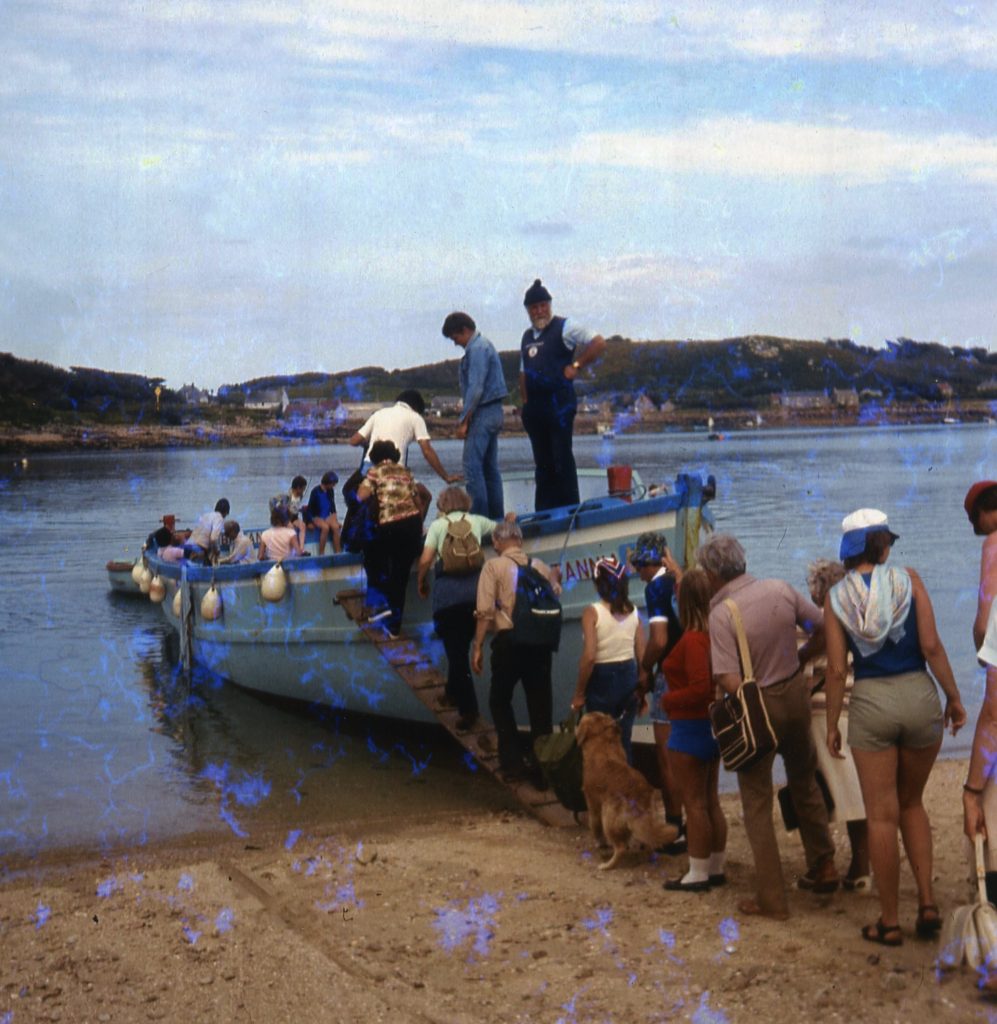
Now tourism is the islands’ main source of employment and income, 80% of jobs are related to the visitor market accounting for 85% of the economy. Annual visitor numbers are around 110,000, mainly from May to September.